

Sometimes it comes and hits you hard. Sometimes you can sense where it’s coming from. At times there are clear triggers. But often, it’s like being struck by lightning under a perfectly clear blue sky.
Right now, that’s what I’m experiencing — it feels as if I’ve been struck by lightning.
In my former life as a professional opera singer, one of my favourite song cycles to perform was a collection of songs for voice and piano by Claude Debussy. Among them was a poem by Paul Verlaine, Il pleure dans mon cœur (“It rains in my heart”), which captures exactly how I feel when I’m hit like this.
Il pleure dans mon cœur
Comme il pleut sur la ville.
Quelle est cette langueur
Qui pénètre mon cœur?
Ô bruit doux de la pluie
Par terre et sur les toits!
Pour un cœur qui s’ennuie,
Ô le chant de la pluie!
Il pleure sans raison
Dans ce cœur qui s’écœure.
Quoi! nulle trahison?
Ce deuil est sans raison.
C’est bien la pire peine
De ne savoir pourquoi,
Sans amour et sans haine,
Mon cœur a tant de peine.
Rain pours over my heart as it pours over the city. What is this languor that penetrates my heart?
Later, Verlaine writes: “It rains without reason in this heart that is weary. What? No treason? This grief has no reason.”
And finally: “It is the worst pain — not knowing why, without love and without hate, my heart has so much pain.”
At times when depression comes over me without any clear reason, this poem captures the feeling perfectly.
I’ve been here many times before, and I know I’ll be here again. I don’t have a magic cure for myself or anyone else who struggles with depression. But I try to be kind to myself — to give myself grace, to allow space to breathe, and to acknowledge whatever I’m feeling (or not feeling). Sometimes there’s just a deep sadness, darkness, and numbness.
It isn’t easy being a mother who suffers from depression. It’s complicated when your children are older and can see that something’s wrong — when they ask why you’re crying, why you look sad, or why you don’t seem quite yourself. I’m not trying to hide it, but I don’t want to frighten them or make them think they’ve done something to upset me. Often, I’m simply not ready to talk about it — not with them, not with anyone — because I’m still trying to make sense of it myself.


I used to ask, “Why me?” or “Why can’t I be normal?” — though I know there’s no such thing as normal. Now, most of the time, I no longer ask those questions. I just try to breathe through it and accept that this is part of who I am. It doesn’t define me, but it is part of what makes me unique.
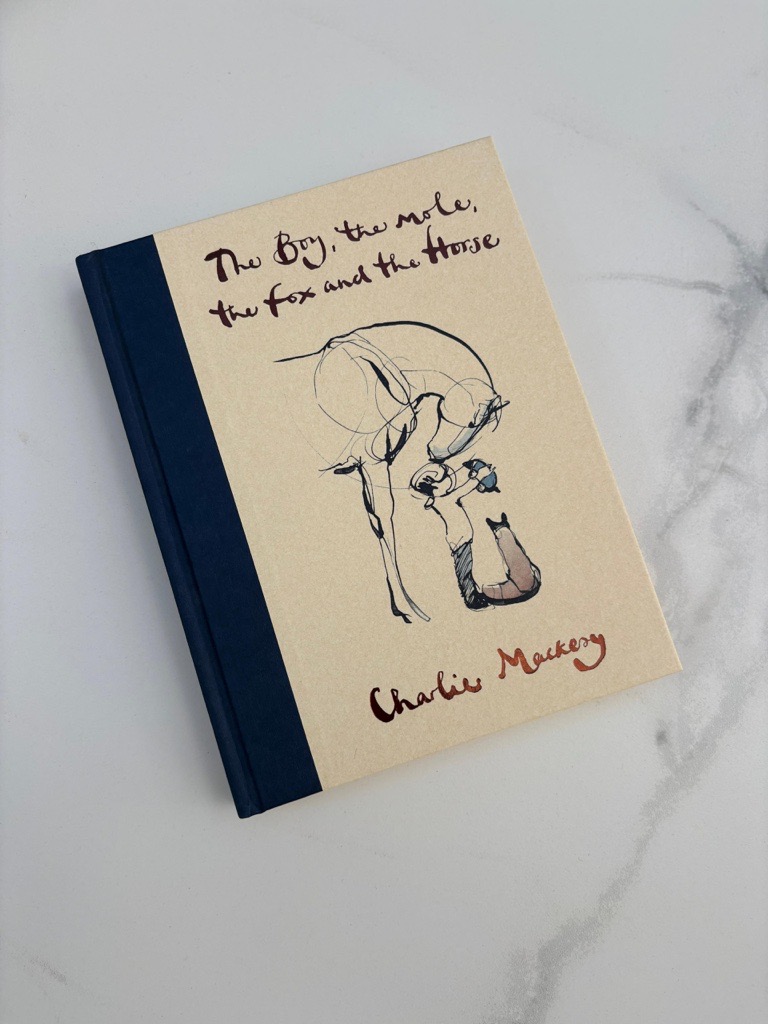
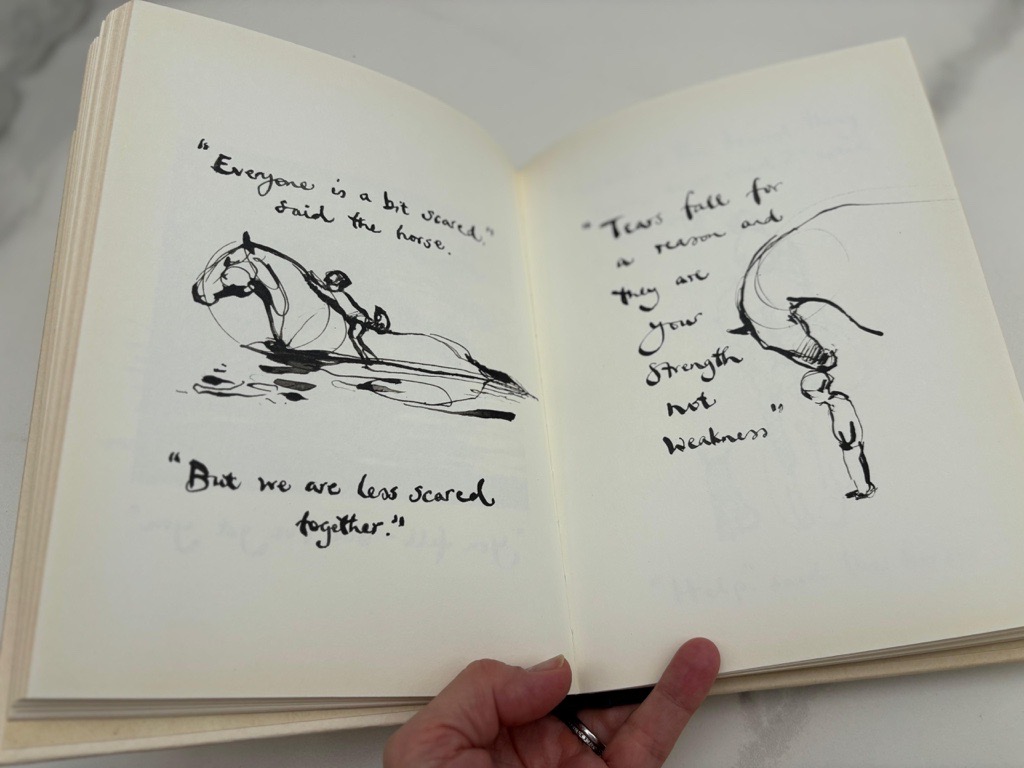
While I don’t find comfort in knowing that I live with depression which comes and goes, I have come to a quiet acceptance. I find solace instead in nature, in poetry, and in books. One I often return to — besides Verlaine’s poem — is Charlie Mackesy’s The Boy, the Mole, the Fox & the Horse. I like to open it at random, and no matter what page I land on, I always find a sense of comfort and peace.
“This storm is making me tired,” said the boy.
“Storms get tired too,” said the horse. “So hold on.”
— Karin x
https://www.mentalhealth.org.uk/explore-mental-health/get-help
https://www.nhs.uk/nhs-services/mental-health-services
https://www.nhs.uk/mental-health/conditions/depression-in-adults/overview
https://www.youngminds.org.uk/young-person/mental-health-conditions/depression
https://www.waterstones.com/book/always-remember/charlie-mackesy/2928377337124
https://shop.charliemackesy.com